Okay, so check this out—I’ve poked at a lot of blockchain explorers over the years. Here’s the thing. Some feel slick but shallow, others are clunky yet powerful, and a few just pretend to do both. Initially I thought Solana explorers would all look the same, but then I kept finding different behaviors and details that made me rethink that assumption. Long story short: the tool you choose actually changes how you read on-chain activity, especially for NFTs where timing and provenance matter a lot.
Whoa! The first time I used Solscan I had a real „aha” moment. My instinct said this was more than a pretty UI. It surfaces token mint metadata quickly, shows token holders in a way that feels immediate and tactile, and it surfaces program interactions that other explorers gloss over. On one hand that clarity speeds up decisions; on the other, it can make mistakes painfully obvious—and that is very very important for collectors and devs alike. I’m biased, but that focus on clarity is what keeps me coming back.
Really? Yes. When you track an NFT drop you want raw, reliable data not fluff. Hmm… the NFT tracker tools in Solscan let you follow mints, transfers, and marketplace activity without losing the chain of events. The UI compacts transactions so you can spot a wash trade or a suspicious pattern in seconds, though actually, wait—it’s not perfect and sometimes metadata loads slowly during heavy traffic. Still, the combination of quick filtering and detailed logs is a huge productivity win for anyone doing due diligence.
Short aside: I’m not 100% sure about everything. Sometimes metadata fetches fail. Sometimes the token URI points to IPFS and the gateway hiccups. On the whole, though, the team behind the explorer seems attuned to what Solana users need. My instinct said they’d prioritize speed, but they also added developer-centric features and analytics, which surprised me in a good way. There’s a balance here between snapshot simplicity for collectors and deeper telemetry for integrators, and Solscan leans toward both without feeling bloated.
Wow, check this—there’s a search behavior that saved me time. I was tracking a small-cap NFT project from Miami and needed to confirm the original minter’s address. Few clicks later I had the full mint history and token metadata in front of me, and that cut an hour of digging down to five minutes. On one hand that ease-of-use is almost dangerous because it makes fast assumptions possible; on the other, when you cross-check creator addresses and on-chain royalties it forces a more responsible workflow. Something felt off about projects that hide provenance, and the explorer helps surface those red flags.
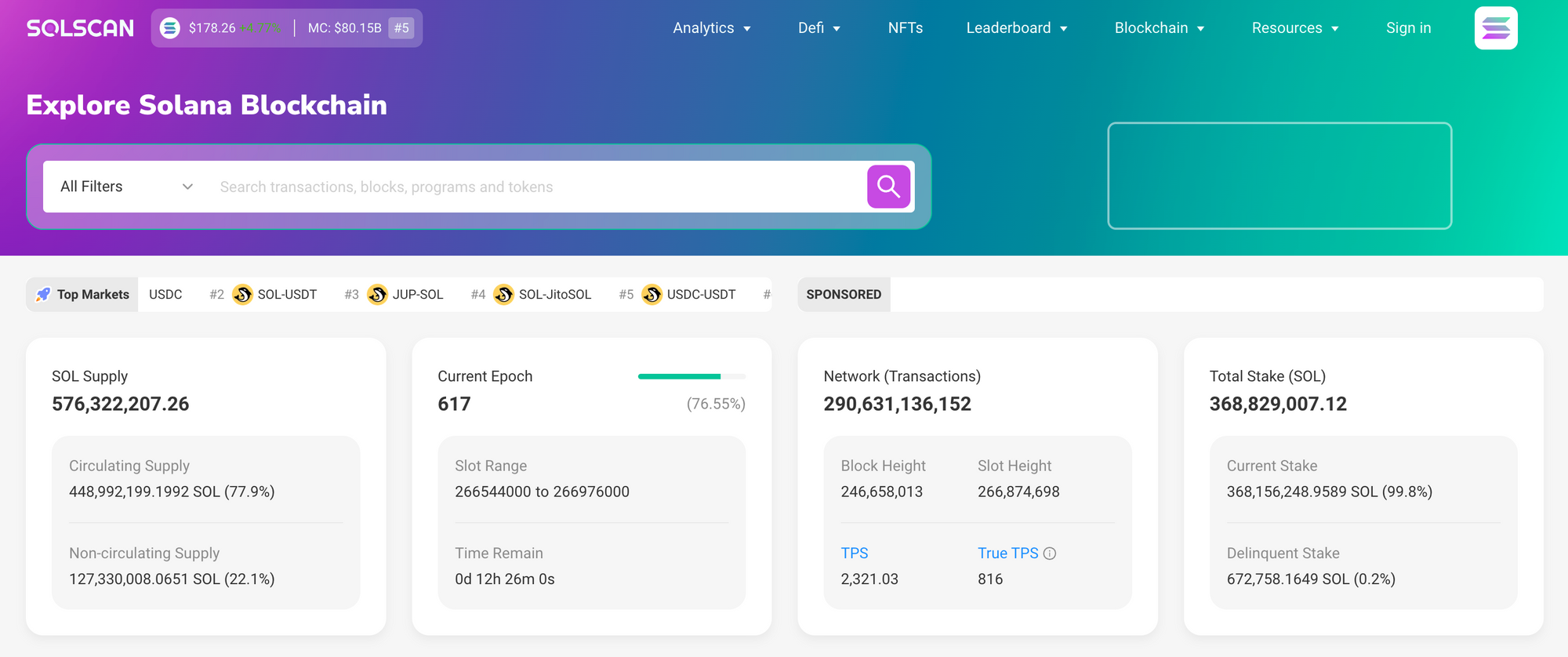
How I Use the solscan explorer official site in my workflow
I drop in a mint address, scan the token history, then check holders and swap activity—simple and repeatable. The solscan explorer official site provides filters that let me slice data by block range, program interaction, or wallet behavior, and that is a huge advantage when I’m triaging potential fraud or just verifying rarity. Initially I thought I needed a full analytics stack to do this, but then I realized that a good explorer already puts most of the necessary signals front-and-center. On the other hand, for deep statistical analysis I still export data and run it through scripts, though for daily checks the built-in UI usually suffices.
Seriously? Yes—because speed isn’t everything; context matters. The transaction detail view shows inner instructions, CPI calls, and program logs, so if you’re debugging a token mint or a failed transfer you see the breadcrumbs. This matters because on Solana many token flows involve multiple programs interacting in a single slot, and missing one instruction can lead you to the wrong conclusion. I’m not a fan of opaque explorers; give me transparency or give me somethin’ else to chew on—transparency wins every time.
Hmm… there’s a human element here too. I once flagged a suspicious pattern to a small project’s admin (oh, and by the way they were surprised but grateful) and that led to a patch. That taught me that explorers don’t just observe the chain; they change behavior by making actions visible. On one hand that’s empowering for community governance; on the other, it means bad actors adapt, so continuous improvement in tooling is essential. I like that Solscan iterates fairly quickly—bugs are fixed and features crop up based on real user stories.
I want to be practical about limitations. Solscan is solid, but heavy traffic on the network or on the site itself can slow metadata retrieval, and occasionally program logs are cryptic. Also, not every off-chain royalty or marketplace nuance shows up on-chain, so manual verification is still needed. That said, for on-chain provenance, token supply verification, and quick holder snapshots it is one of the most user-friendly explorers on Solana I’ve used. Honestly, this part bugs me when other tools promise the same and fall short.
Here’s a quick checklist I use when evaluating any Solana explorer for NFT work. First, can it show original mint transactions? Next, does it expose inner instructions and CPI calls? Third, are holder lists and token balances easy to export or snapshot? Fourth, does it handle program-specific filters for the marketplaces you care about? If an explorer nails three out of four, it’s worth adopting as a daily tool. Solscan hits most of those marks for me, which is why it’s in my default toolkit.
Really—final thought: the ecosystem is evolving fast. New token standards, wrapped assets, and on-chain metadata strategies keep emerging, and explorers must keep pace. I’m excited and a little anxious about the pace of change. Initially I thought stability would slow innovation, but actually, the rapid iteration across wallets, NFT platforms, and explorers creates better tooling faster. For collectors, devs, and auditors alike, having a reliable, nuanced explorer like Solscan makes on-chain life simpler and more defensible.
FAQ
Q: Can the Solscan NFT tracker verify creator royalties and provenance?
A: It can surface mint addresses, token metadata, and holder changes which are key to provenance. Actual royalty enforcement often happens at the marketplace level and sometimes off-chain, so use on-chain signals from Solscan alongside marketplace data for a full picture.
Q: Is Solscan suitable for developers debugging smart contracts?
A: Yes. The explorer exposes inner instructions, program logs, and CPI details that help track how programs interact across a transaction. For deep debugging you may still want local dev tools, but Solscan is excellent for live network inspection and quick audits.