Whoa! Okay, quick confession: I installed Rabby on a whim last month and then spent way too many hours poking under the hood. It felt different right away — snappy UI, clear transaction simulation, and multi-chain support that didn’t require me to reconfigure stuff every five minutes. I’m biased, sure, but this is the kind of wallet that tries to make gas-price guessing less of a gamble. Initially I thought it was just another Chrome extension, but then realized it actually ties together common DeFi pain points in a thoughtful way. Hmm… there’s a lot to like, and a few things that bug me (more on those below).
If you’re a power user — meaning you run multiple networks, use hardware wallets, and care about transaction safety — this walkthrough will save you time. Really. I’ll give you the quick install path, the security checks I run right away, how to use the transaction simulation, and some workflow tweaks that I rely on daily. Expect pragmatism, not fluff. And somethin’ tells me you’ll appreciate the detail.
First step: pick your browser. Rabby works best as a Chrome/Chromium extension, but Brave and other Chromium-based browsers are fine too. Firefox support exists-ish depending on versions, though I usually stick with Chrome for extensions. Downloading from the official channel matters — more on verifying that below. Seriously? Yes — fake extensions are a real thing, so don’t be cavalier about it.
Install time is short. Open the Chrome Web Store, search „Rabby”, click add, and grant the minimal permissions asked for. Wait a sec — stop before you click “Add extension.” Check the developer and the extension ID. Compare it to the official source listed at the project’s site or repo. If anything seems off, back out. My instinct said „do a double-check” and that saved me from a sketchy clone once.
Why I picked rabby wallet
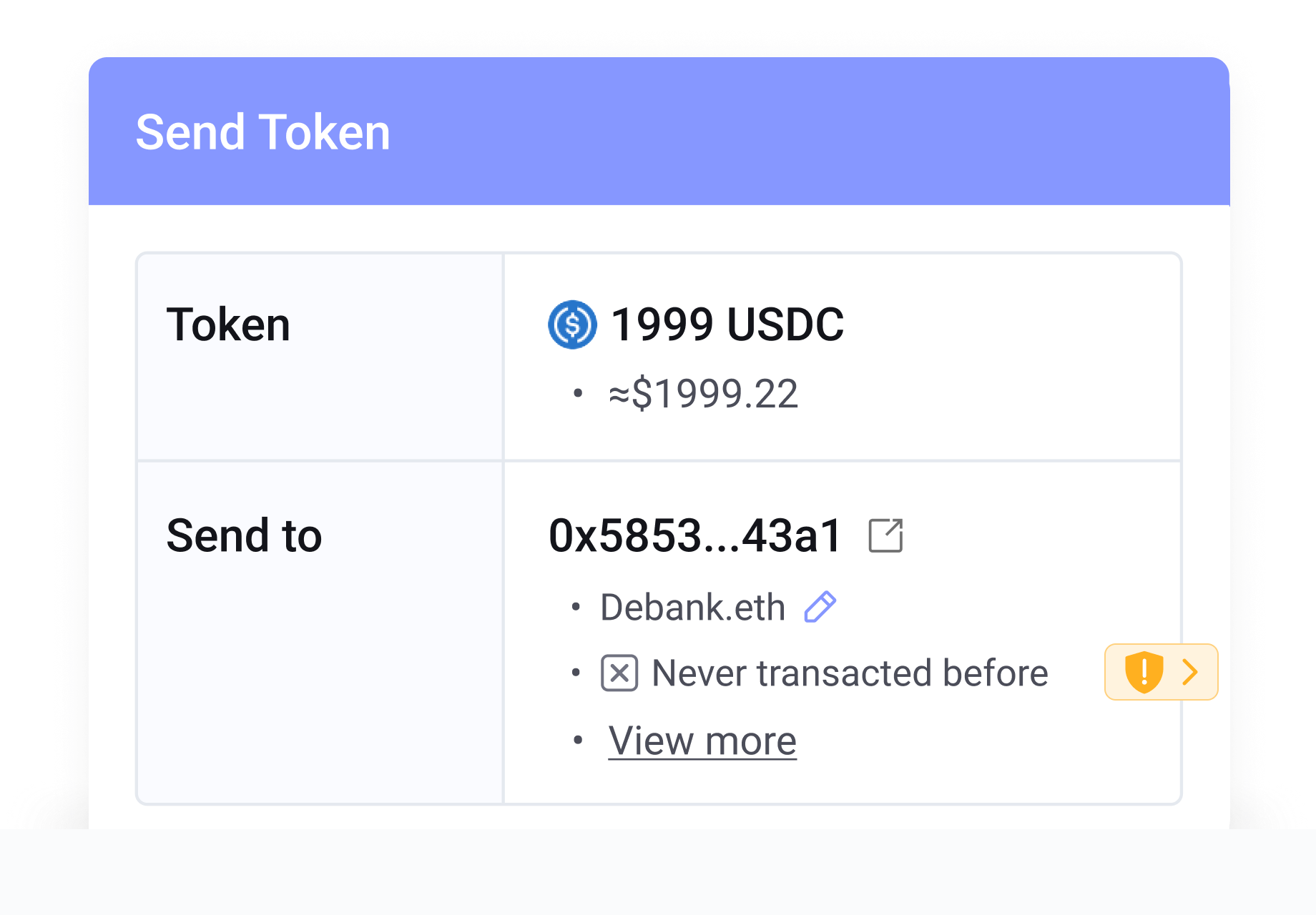
I’ll be honest: I picked rabby wallet because transaction simulation is front-and-center. On one hand, many wallets blur that feature into the background. On the other hand, Rabby places it up front so you can preview gas usage, token approvals, and reverts before you sign. Initially I thought previews were mostly marketing; actually, wait—let me rephrase that: I thought previews were cosmetic, but the execution here is useful and saved me real money. My instinct said it would be helpful for complex swaps, and it was right.
Installation checklist — a short one to follow: 1) verify the extension identity, 2) import or create a seed (use a hardware wallet if you can), 3) configure chains, and 4) test with a small transfer. Do that and you’re golden. It’s basic, but people skip steps all the time. On one hand the UI guides you; though actually, power users want quick keyboard-driven workflows. Rabby does pretty well here, but there’s room for polish.
Next, a security drill I run every install. One: I never paste my seed into a browser on a public network. Two: I prefer connecting a hardware wallet (Ledger/Trezor) via the extension if I can. Three: check permissions — the extension should request access to „read and change data on websites you visit” for on-page signing, but it should not ask for things like remote key export. Four: lock the extension with a strong password if you use a hot wallet. These steps are very very important, even if they feel tedious.
Here’s the nitty-gritty on linking a hardware wallet: open Rabby, choose „Connect hardware wallet,” follow the prompts to pair via WebHID or U2F, and then pick the account you want to use. Initially I thought this was a bit clunky, but it’s actually streamlined compared to older flows. If you run into issues, reboot the browser and re-enable the extension — sometimes WebHID sessions act up. I’m not 100% sure why that happens on certain machines, but a restart usually helps.
Now, transaction simulation. This is the real value proposition for many of us. Rabby parses the transaction, simulates it against the target chain, and shows potential failures, reverted calls, and estimated gas breakdowns. That’s huge when you’re interacting with unfamiliar smart contracts or doing nested swaps. Use simulation before clicking „Confirm.” My gut feeling saved me when a DEX route was about to drain a small token due to slippage; the simulation flagged a revert and I avoided a failed transaction fee.
How to use simulation effectively: pick a swap or contract call, click the preview/simulate button, and read the result. If you see „may revert” or a nested call failure, step back. Look at gas estimation and what portion is for token approval versus the core call. If an approval is unusually high, consider using a limited allowance or eth approval reset prior to the main tx. (Oh, and by the way… if you’re doing token approvals, do limited approvals when you can.)
Performance notes: Rabby runs lightweight. It caches chain info locally for faster UI loads, and it avoids hitting remote nodes excessively. That said, real-time gas and simulation quality depend on the RPC endpoints configured. If you want fast, reliable simulations, point Rabby at a premium RPC (your own node, QuickNode, Alchemy, etc.). I tend to run a self-hosted node for mainnets I care about, and that consistently improves reliability. On some networks, public RPCs throttle you, and that makes the simulation lag — annoying but fixable.
Let’s talk networks. Rabby supports Ethereum L1, many L2s, and EVM-compatible chains. You can add custom networks easily. I add Arbitrum, Optimism, Polygon, BSC, and a few testnets that I spin up. Pro tip: name custom networks clearly (use prefixes like „dev-” or „test-„) so you don’t accidentally transact on the wrong chain. Multiple chains are powerful, but they introduce human-error risks. I almost sent funds to a testnet once — long story, but I learned to double-check the network banner now.
Privacy and permissions. Rabby asks for „site access” to allow in-page signing flows. You can restrict access to the active tab or only on click, which limits exposure. Also, consider using a separate browser profile for DeFi activity. I keep one profile for wallets and trading, and another for general browsing — it reduces cross-site tracking and accidental permission grants. This is a small habit that compounds into major risk reduction over time.
Advanced flows: batch transactions and multi-sig coordination. Rabby can manage batched calls via dApp integration, and it plays well with multi-sig services (Gnosis Safe, etc.). If you run a DAO treasury or shared account, use Rabby for local simulation then propose the batched payload to your Safe. On one hand this adds steps; on the other hand it avoids costly mistakes. Balance speed and safety according to your tolerance — if money is at stake, prefer caution.
Troubleshooting quick hits: if simulation fails consistently, switch RPCs. If hardware wallets aren’t detected, toggle WebHID/U2F in the extension settings and update firmware. If gas seems wrong, check the chain’s native gas token changes or pending network congestion. And always try a tiny test transaction when in doubt. It’s boring, but it saves your bacon more than once.
One quirk that bugs me: the extension occasionally shows subtle UI lag on low-end machines. Not a showstopper, but it’s noticeable when scanning several token approvals. Also, sometimes network labels aren’t obvious for custom chains — another reason to use clear naming. Despite that, the team iterates fast, and their release notes show focused fixes.
FAQ
Is Rabby safe to use with a hardware wallet?
Yes. Using Rabby in conjunction with Ledger or Trezor keeps your private keys offline. Connect via the hardware option, verify every signature on the device, and avoid exporting seeds into the browser. That’s the basic rule — don’t paste your seed anywhere and keep firmware updated.
Can Rabby simulate transactions on Layer 2s?
Absolutely. It supports many L2s. Simulation quality depends on your RPC endpoint; for best results, use a reliable RPC provider for the L2 in question. If you see inconsistent results, try switching RPCs or using a node closer to the chain’s infrastructure.
What if the extension asks for too many permissions?
Question every permission. Limit site access, use browser profiles, and double-check the extension ID against the official source before installing. If it still feels sketchy, uninstall and reach out to the project channel or community for verification.
Alright — wrapping up, but not the neat sort of wrap-up because I don’t like neat endings. I’m feeling cautiously optimistic about Rabby: it fills a practical gap with transaction simulation and multi-chain convenience, yet it isn’t perfect. If you care about safety and efficiency, install it, connect a hardware wallet, and point it at a reliable RPC. Test with small amounts first. If something felt off, my instinct says investigate — and do a restart. This part bugs me: too many people skip the basics. Don’t be that person.
Okay, check it out and tell me what you find. I might’ve missed a corner case or two — or three — but this gets you 90% of the way there. Seriously, try the simulation on a complex swap and watch how much anxiety that removes. Really.